

Healings, Miracles, and the Transformation of the Mind Chapter 6 of Volume 1 of the Faith Based Edition
January 7, 2026 | by David Czerwinski

New Testament Teachings
The arrival of Jesus Christ marks the pinnacle of God’s revelation about the human mind and its potential for renewal. In the Gospels, Jesus not only teaches about the inner life but demonstrates divine power over sickness, demonization, and brokenness—restoring bodies and minds in ways that reveal the brain’s God-given capacity for healing and transformation. His miracles are signs pointing to a greater reality: the kingdom of God breaking into a fallen world, where minds enslaved by fear, sin, or affliction can be set free. The New Testament’s emphasis on repentance, faith, and “taking every thought captive” (2 Corinthians 10:5) aligns perfectly with neuroplasticity—the biological mechanism God designed for lifelong change. Jesus’ ministry shows that true renewal begins with encountering Him, the One who makes all things new.
Consider the story of the paralyzed man lowered through the roof in Capernaum (Mark 2:1–12). Crowds pack the house where Jesus teaches. Four friends, desperate for their paralyzed companion, dig through the roof and lower him on a mat before the Lord. Jesus sees their faith and says, “Son, your sins are forgiven.” Religious leaders mutter about blasphemy—only God can forgive sins. Jesus responds, “Which is easier: to say, ‘Your sins are forgiven,’ or ‘Get up, take your mat and walk’?” Then, to prove His authority, He commands the man to rise. Immediately, the paralytic stands, picks up his mat, and walks out praising God.
This miracle speaks volumes about the mind-body connection. Paralysis often involves neurological damage—severed pathways, atrophied muscles. Yet at Jesus’ word, the man moves. From a faith perspective, this is divine healing overriding natural limits, but it also showcases neuroplasticity’s role in recovery. Modern cases of sudden functional restoration after prayer or faith experiences suggest rapid neural reorganization—dormant pathways activating, inflammation reducing. The man’s mind, filled with hope and faith in Jesus’ words, cooperates with divine power. His immediate obedience—standing, walking—strengthens new connections through action. Jesus addresses sin first because distorted thinking (guilt, shame) can exacerbate physical affliction, but forgiveness releases the mind for healing.
Jesus’ demoniac deliverances further illuminate mental renewal. The Gerasene demoniac (Mark 5:1–20) lives among tombs, tormented by a legion of demons—self-harming, uncontrollable, isolated. Jesus commands the spirits out; the man is found “sitting, clothed, and in his right mind.” The transformation is total: from chaos to calm, harm to peace. While demonization is spiritual, its effects mimic severe mental illness—disordered thinking, destructive behavior. Deliverance brings instant clarity, showing God’s authority over the mind. Neuroplasticity plays a supportive role: post-deliverance, the man sits at Jesus’ feet, learning—repetitive truth intake rewiring patterns of fear and violence into peace and purpose. His testimony spreads the gospel, turning a broken mind into a powerful witness.
The woman with the issue of blood (Mark 5:25–34) touches Jesus’ cloak in faith and is healed after 12 years of suffering. Jesus says, “Daughter, your faith has healed you. Go in peace.” Chronic illness often reshapes the brain—heightened pain circuits, anxiety loops. Her faith—focused intention on Jesus—triggers restoration. Modern studies on faith and healing show prayer reducing stress hormones, enhancing plasticity for recovery. Jesus affirms her mind’s role: belief activates God’s power.
Jesus’ teachings directly target thought transformation. In the Sermon on the Mount (Matthew 5–7), He elevates inner life: anger equals murder, lust equals adultery. “You have heard… but I tell you…” reframes legalism into heart renewal. He commands worry-free thinking: “Do not worry about tomorrow” (Matthew 6:34), offering bird-and-lily illustrations to rewire anxiety with trust. The parable of the sower (Matthew 13) shows thoughts as soil—hard, shallow, thorny, or good—determining fruitfulness. Good soil requires preparation: removing distractions, deepening roots through meditation on truth.
Paul builds on this in the Epistles. “Do not conform to the pattern of this world, but be transformed by the renewing of your mind” (Romans 12:2) is the New Testament’s clearest call to neuroplasticity. “Take every thought captive to obey Christ” (2 Corinthians 10:5) means intercepting destructive patterns, replacing them with truth. Philippians 4:8 lists thought filters: true, noble, right, pure—repetition building godly circuits. Ephesians 4:23 urges being “renewed in the attitude of your minds.”
Uplifting stories abound. Peter’s denial (Luke 22) stems from fear; Jesus’ restoration (John 21) rebuilds boldness—Pentecost preaching flows from renewed mind. Saul’s Damascus road encounter (Acts 9) instantly rewires persecution into passion. Modern testimonies mirror this: addicts freed through gospel-centered programs, scans showing reduced craving centers after faith-based renewal.
Jesus’ miracles weren’t mere displays—they signpost kingdom reality: minds freed from bondage, bodies healed, thoughts aligned with God. Neuroplasticity is the mechanism: faith-filled repetition (prayer, Scripture) strengthens prefrontal control, weakens limbic fear. The ultimate miracle is regeneration—new birth making renewal possible (John 3:3).
As we move to Greek philosophy, we carry this foundation: Jesus not only taught mind renewal but embodied and empowered it. His words—”Take heart, your sins are forgiven”—still transform minds today, using the brain’s plasticity to make us new.
Buy the Full Book on Amazon
Want the complete, extended version with deeper stories, research, and spiritual insights? Get Volume 1 (and the full series) on Amazon.
Try MindSavi – Our Brain-Training App
Practical daily tools based on the same principles in the books. Scripture-based reflections, grounding exercises, and habit builders to help you renew your mind.
RELATED POSTS
View all


MindSavi: Your Space for Sharing Positive Mindset and Growth
September 21, 2025 | by David Czerwinski

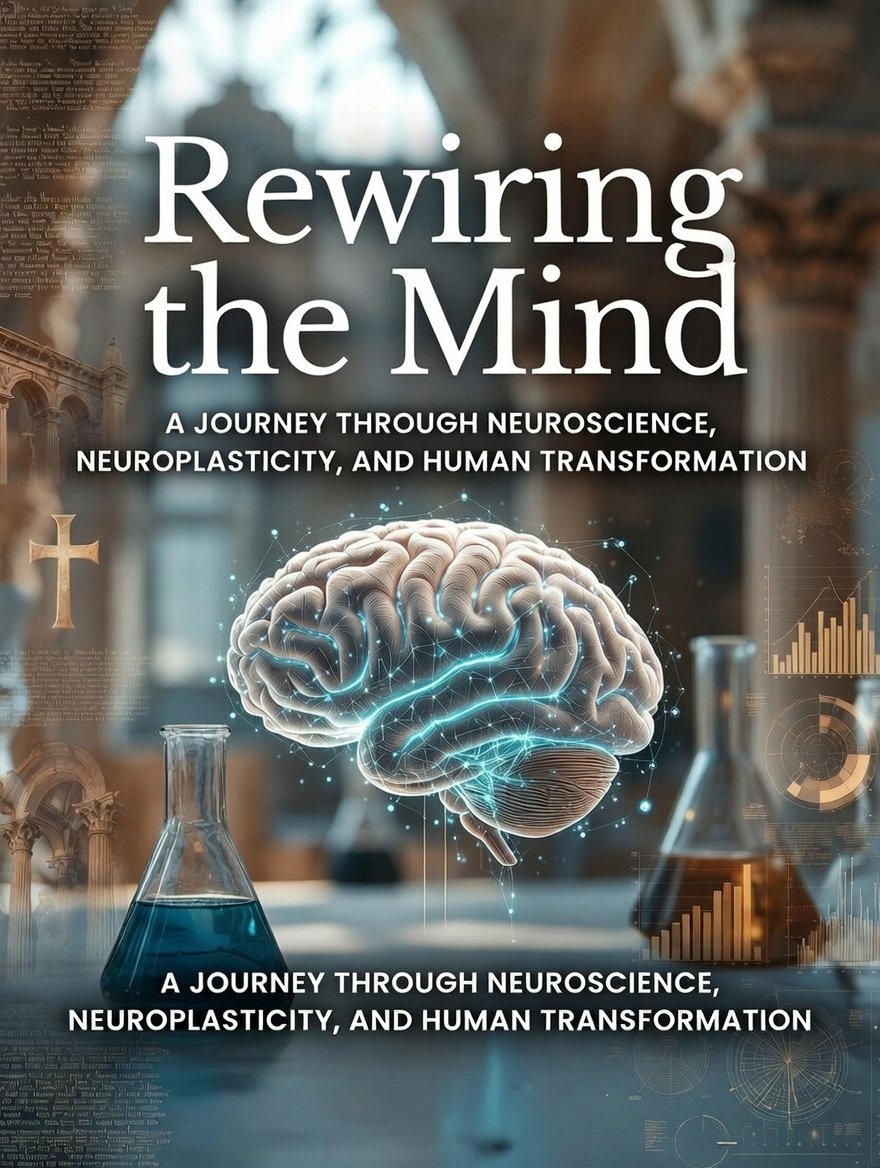
Volume 1 Introduction to “Rewiring the Mind: A Journey Through Neuroscience, Neuroplasticity, and Human Transformation”
April 16, 2026 | by David Czerwinski