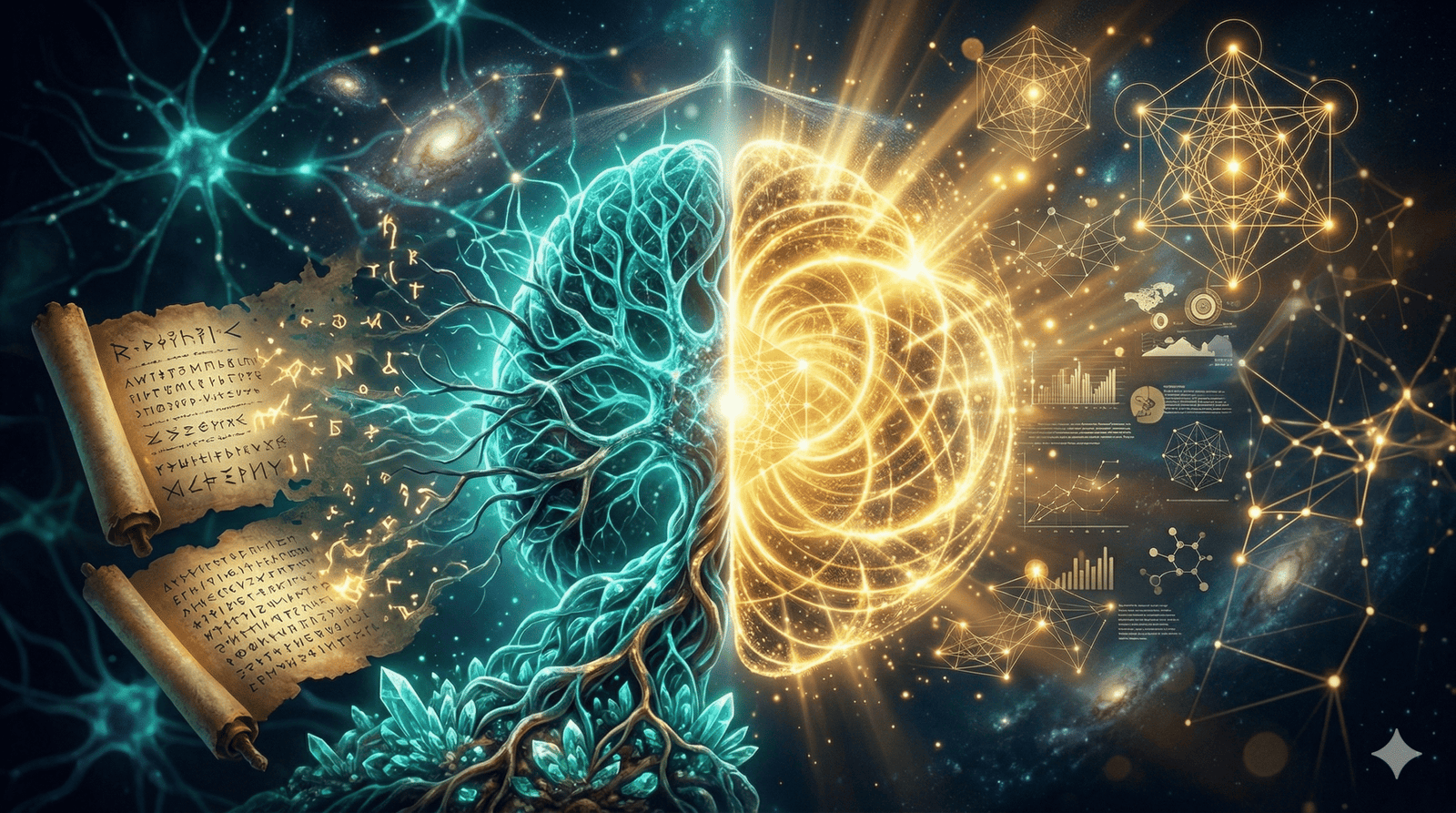
Mesopotamian and Babylonian Contributions – Early Ideas on Neurology in Cuneiform Texts, Chapter 3 of Volume 1 of the Faith Based Edition
January 8, 2026 | by David Czerwinski

Mesopotamian and Babylonian Contributions – Early Ideas on Neurology in Cuneiform Texts
The rivers Tigris and Euphrates, watering the land God called “good” in the beginning, became the cradle for some of humanity’s earliest cities and written records. In the centuries after Noah’s descendants dispersed from Babel, the Sumerians, Akkadians, Assyrians, and Babylonians built sophisticated societies with laws, mathematics, astronomy, and medicine—all inscribed on durable clay tablets. These cuneiform texts, miraculously preserved through millennia, offer our first extensive written glimpses into how ancient peoples understood head injuries, seizures, mental disturbances, and the possibility of recovery. Though they often attributed illness to gods or demons, their careful observations and practical treatments reveal the Creator’s common grace: a brain designed with resilience and adaptability—neuroplasticity—that allowed many to heal and return to life even in a world scarred by sin.
Picture a bustling marketplace in ancient Ur around 2000 BC. A merchant named Ea-nasir, known from surviving letters for his copper trade, suffers a blow to the head during a robbery. He collapses, his limbs jerk uncontrollably, foam appears at his mouth. His family summons the asu (physician) and asipu (exorcist). The physician examines the wound, cleans it with date wine, applies a poultice of barley and herbs, and binds the skull. The exorcist recites incantations against the “hand of a ghost.” Days turn to weeks. The seizures lessen. Ea-nasir awakens confused but gradually regains speech and movement. He returns to his tablets and scales, forever changed yet functional. This reconstructed story, drawn from the patterns in thousands of medical tablets, illustrates the hope that flickered even in ancient diagnoses—hope rooted in the brain’s God-given capacity to reorganize and restore.
Mesopotamian medicine was remarkably advanced for its time. Healers operated within a dual system: the asu focused on physical remedies—surgery, drugs, bandages—while the asipu addressed supernatural causes through rituals. Yet the boundary was fluid, and many treatments combined both. The famous Diagnostic Handbook compiled by Esagil-kin-apli of Borsippa around 1069 BC during the reign of Adad-apla-iddina organizes symptoms systematically, much like a modern textbook. It lists over 3,000 entries, including detailed descriptions of neurological conditions: “If a man’s head is hot continually and his eyes are full of tears… the hand of his god is upon him.” Or more clinically: “If the top of a man’s head continually burns him and his eyes are dim… that man will die.” But many cases end with prognosis of recovery, especially when rest and medication were applied.
Trephination, already encountered in Chapter 1, appears in Mesopotamian archaeological evidence as well. Skulls from sites like Kish and Nineveh show healed openings, often placed over areas that would relieve pressure from trauma or infection. The Code of Hammurabi (c. 1750 BC) regulates such surgery explicitly: “If a physician performs a major operation with a bronze lancet and saves the patient’s life… he shall receive ten shekels of silver.” But if the patient dies, the surgeon’s hand could be cut off. These harsh laws reflect both the frequency and the perceived value of head surgery—evidence that physicians regularly intervened and often succeeded.
One of the most moving collections comes from the royal correspondence of Mari on the Euphrates (18th century BC). King Zimri-Lim’s archives include letters from physicians reporting on court officials’ head injuries. In one, a healer describes a nobleman struck by a falling beam: “His skull is broken… he speaks but not clearly… his limbs tremble.” Treatment involves binding, herbal plasters, and restricted diet. Weeks later: “He now speaks clearly and walks with assistance.” Such progress points directly to neuroplasticity: neural pathways rerouting around damage, speech centers compensating, motor functions slowly returning through repetition and rest.
From a faith perspective, these successes testify to God’s sustaining grace in a pagan culture. Though healers invoked Marduk or Ishtar, the true source of healing was the Creator who “heals all your diseases” (Psalm 103:3). The brain’s plasticity—new synapses forming, unused areas recruiting for lost functions—was built into Adam’s descendants from the beginning, allowing survival in a cursed world. Just as God promised Noah’s family fruitfulness and dominion despite the Flood’s judgment (Genesis 9:1), He embedded resilience in the human frame. Babylonian recovery stories parallel biblical accounts of restoration: the paralytic healed by Jesus (Mark 2), or modern believers overcoming traumatic brain injury through therapy and prayer—both relying on the same divine mechanism.
Assyrian medical texts from the library of Ashurbanipal (7th century BC) provide even more detail. They describe “falling sickness” (epilepsy) with accurate phases: aura, loss of consciousness, convulsions, post-ictal confusion. Treatments included protective amulets, herbal sedatives, and restraint during attacks. Many patients lived long lives between episodes, suggesting the brain adapted by strengthening inhibitory pathways. Migraines (“sickness of the head”) were treated with cold compresses and willow bark derivatives—natural sources of salicylic acid, precursor to aspirin.
The compassion in these records uplifts the heart. Physicians often visited patients repeatedly, adjusting treatment based on progress. A letter from a healer to a king expresses joy: “Your servant’s son, whom the beam struck on the head, now rises and eats normally.” Such care reflects the image of God in humanity—the drive to heal and restore, foreshadowing Christ the Great Physician.
Mesopotamian views blended observation with mythology. Illness was often “the hand of a god” or demon, yet treatments were practical: over 250 plant-based drugs, mineral salts, and surgical techniques. This pragmatic spirit aligns with God’s gift of reason (Isaiah 1:18), enabling progress despite spiritual blindness.
As we reflect on these clay tablets, we see shadows of divine design. The brain’s neuroplasticity allowed ancient merchants, soldiers, and children to recover from injuries that could have ended their lives. Their stories—of patient care, gradual healing, and return to community—inspire hope today. For believers, they point to a greater renewal: the transformation possible when we present our minds to God, allowing the Holy Spirit to rewire toxic patterns into Christlike thinking. The same plasticity that helped a Babylonian official speak again enables modern saints to overcome anxiety through Scripture meditation and prayer.
Leaving the rivers of Mesopotamia, we carry gratitude for these early witnesses to God’s provision. In a world far from Eden, He ensured the brain could adapt, heal, and prepare for the ultimate renewal promised in Christ.
journey starts now.
<! — link to chapter 4 of volume 1 faith based… complete –>
Continue the Journey with Chapter 4 Biblical Perspectives on the Mind and Renewal – Adam and Eve, the Fall, and Early Concepts of Consciousness , Volume 1 of the Faith Based Edition
<! — link to chapters 2 of volume 1 faith based –>
Head back to Chapter 2 Ancient Egyptian Views on the Brain and Heart, of Volume 1 of the Faith Based Edition
Buy the Full Book on Amazon
Want the complete, extended version with deeper stories, research, and spiritual insights? Get Volume 1 (and the full series) on Amazon.
Try MindSavi – Our Brain-Training App
Practical daily tools based on the same principles in the books. Scripture-based reflections, grounding exercises, and habit builders to help you renew your mind.
RELATED POSTS
View all